


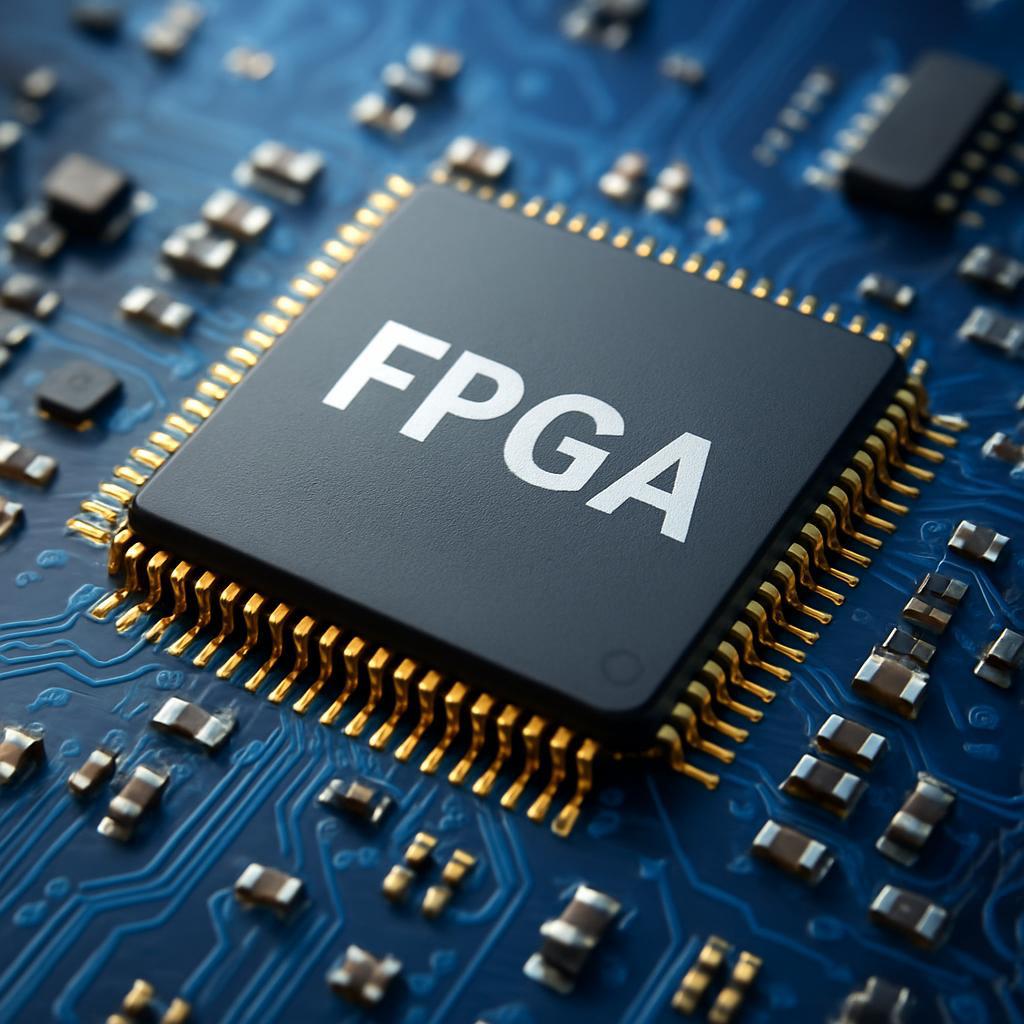
FPGA Design & Development Services
FPGA Arhitecture
Custom FPGA architecture design optimized for performance, power consumption, and cost. Our team develops scalable solutions for complex digital systems using:
– AMD Xilinx FPGAs (ex.: Spartan Ultrascale + , Kintex 5, Artix 7, Zynq UltraScale+)
– Altera Intel FPGAs (ex.: Agilex-I , Cyclone 10, Arria V , X.)
– HDL coding (VHDL, Verilog, SystemVerilog)
– High-level synthesis
Applications:
Industrial control systems, medical imaging devices, quantum computing interfaces, real-time data processing.
IP Core Verification
Rigorous verification methodologies ensure your FPGA IP cores meet functional and timing requirements:
– UVM-based verification environments
– Functional simulation and formal verification
– Timing analysis and closure
– Protocol compliance testing
– Regression testing frameworks
Reduce time-to-market with validated, production-ready IP cores.
Industries We Serve
Industrial Automation
FPGA solutions for PLCs, motion control, machine vision, and predictive maintenance systems.
Medical Devices
Safety-certified FPGA designs for imaging equipment, diagnostic devices, and patient monitoring systems compliant with IEC 62304.
Quantum Computing
Specialized control and readout systems, high-speed data acquisition, and qubit control interfaces.
Technology Innovation
Custom FPGA solutions for emerging technologies, R&D projects, and proof-of-concept systems.
Research Institutes
Flexible FPGA platforms for experimental setups, data acquisition systems, and scientific instrumentation.
Disentra’s FPGA Development Process
1. Concept – Requirements Analysis
Our experts will get to work from day 1 with your product team to understand technical specifications, features, roll out schedule and constraints.
2. Architecture Design
Our typical phase to develop an optimized FPGA architecture balanced for performance, resources optimization and power consumption. This is the step when first glance at total IOs number, Transceiver count speed, DSP cores/slices and some potential ideal FPGA Part Number are revealed.
3. Implementation
Typically the longest phase includes HDL coding, peer review and official repository submit, IP integration and verification, synthesis.
4. Verification
Comprehensive simulation, formal verification, and functional testing.
5. Validation
Hardware testing, timing closure, and performance validation on target platforms.
6. Final Documentation and Support
Documentation, training, and ongoing maintenance support.
FPGA Technologies & Tools
Platforms:
– Xilinx Vivado, Vitis, ISE
– Intel Quartus Prime
– Synopsys Synplify, Design Compiler
Verification:
– Mentor Questa, Cadence Xcelium
– UVM, SystemVerilog
– MATLAB/Simulink HDL Coder
